As an Amazon Associate I earn from qualifying purchases. Picks are based on manufacturer specs, independent reviews and owner reports.
Our top picks
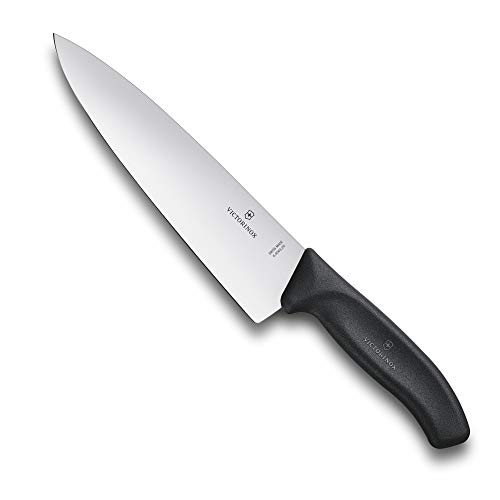
Short on time? Our top recommendation is the Victorinox Fibrox Pro 8-Inch Chef Knife.
Compare
At a glance
The traits that separate these picks, side by side.
| # | Product | Best for | Key feature | |
|---|
| 1 | | — | Stamped X55CrMo14 stainless steel at 56 HRC | Check ↗ |
| 2 | | — | VG-10 core steel at 60 HRC, laminated with stainless cladding | Check ↗ |
| 3 | | — | High-carbon German steel at 57 HRC, forged | Check ↗ |
| 4 | | — | Same X55CrMo14 steel as the Fibrox Pro at 56 HRC | Check ↗ |
| 5 | | — | Stamped steel at approximately 55 HRC | Check ↗ |
| 6 | | — | High-carbon German stainless steel blade | Check ↗ |
| 7 | | — | DEXSTEEL high-carbon stain-free steel | Check ↗ |
| 8 | | — | High-carbon German stainless steel, forged | Check ↗ |
| 9 | | — | Stamped stainless steel blade | Check ↗ |
| 10 | | — | Swedish Sandvik 14C28N steel at 58 HRC | Check ↗ |
In depth
The 10 best, explained
Why each made the cut, where it falls short, and who should buy it.
Best Overall BudgetVictorinox
7 stars makes it the most reviewed and battle-chef knife on the market. The tradeoff: edge retention is only 2 to 3 weeks of daily home cooking before it needs more than a honing steel.
- Stamped X55CrMo14 stainless steel at 56 HRC
- 15-degree factory edge per side
- Fibrox thermoplastic handle, slip-resistant when wet
- No bolster for full-length sharpening
- Standard issue in most culinary school knife kits
- Commercial dishwasher rated
✓ Pros
- Sharpens in minutes on a basic whetstone because the softer steel removes quickly
- 42,000 ratings at 4.7 stars makes it the most reviewed and battle-chef knife on the market
- Survives culinary-school-level abuse and still holds a working edge
- Fibrox handle grips securely in wet or greasy hands without extra effort
- Delivers cutting performance closer to a 150-dollar knife than its roughly 35-dollar price implies
✕ Cons
- Edge retention is only 2 to 3 weeks of daily home cooking before it needs more than a honing steel
- Stamped blade feels lighter and less substantial than forged options like the Mercer Genesis
- Handle design is utilitarian rather than ergonomically refined
- No bolster removes the finger-guard feel some cooks prefer during fast cutting
Best Japanese BudgetTojiro
Arrives factory-sharper than most German knives at three times the price
- VG-10 core steel at 60 HRC, laminated with stainless cladding
- 16-degree inclusive edge grind
- True gyutou profile with a flatter belly
- Laminated wood handle with bolster
- Under 50 dollars for genuine Japanese laminated steel
- Slightly blade-forward balance
✓ Pros
- Arrives factory-sharper than most German knives at three times the price
- VG-10 steel at 60 HRC holds an edge for 4 to 6 weeks, far longer than any stamped budget knife
- Thinner grind slips through dense carrots and squash with noticeably less resistance
- Cheapest reliable entry point into genuine laminated Japanese steel construction
- Flatter gyutou profile rewards push-cutting with cleaner, more efficient cuts
✕ Cons
- Basic laminated wood handle is functional but unrefined compared to pakkawood options
- Chips if used on bone, frozen food, or a glass cutting board
- Requires whetstone maintenance rather than a simple honing steel
- 4.5-star rating is the lowest among top picks here, with complaints tied mostly to handle quality
Mercer
Competes directly with entry-level Wusthof and Zwilling at roughly half the price
- High-carbon German steel at 57 HRC, forged
- Full tang with tapered bolster
- Santoprene textured handle
- 15-degree edge per side
- Moderate belly for both rocking and push-cutting
- About 3 weeks of edge retention under daily use
✓ Pros
- Competes directly with entry-level Wusthof and Zwilling at roughly half the price
- Tapered bolster allows sharpening the full edge, avoiding the heel obstruction of cheaper forged knives
- Santoprene handle grips confidently even when wet
- Forged full-tang build feels more solid in hand than the stamped knives on this list
- 8,500 ratings at 4.6 stars shows consistent quality for a sub-100-dollar forged knife
✕ Cons
- Edge retention of about 3 weeks trails the Tojiro and matches, not beats, the Victorinox
- Less handle refinement than the Victorinox Swiss Modern's contoured synthetic grip
- Lower brand recognition than Wusthof or Zwilling despite similar forged construction
- 57 HRC steel still needs eventual whetstone maintenance as honing alone stops working
Victorinox
More contoured, contemporary handle sits better in a pinch grip than the Fibrox's rounded profile
- Same X55CrMo14 steel as the Fibrox Pro at 56 HRC
- Redesigned contemporary synthetic handle
- Marginally straighter blade profile than the Fibrox
- 15-degree edge per side
- No bolster for full-length sharpening access
- Slip-resistant grip material
✓ Pros
- More contoured, contemporary handle sits better in a pinch grip than the Fibrox's rounded profile
- Identical proven steel and edge retention to the Fibrox Pro carries directly over
- Slightly straighter profile suits cooks who prefer push-cutting over rocking
- Retains the Fibrox's fast, easy sharpening on a basic whetstone
- No bolster allows full-edge sharpening including the heel
✕ Cons
- Costs more than the Fibrox Pro for what is largely a handle redesign
- Same 2 to 3 week edge retention ceiling as the Fibrox at 56 HRC
- The straighter profile difference is subtle enough that most cooks will not notice it
- Smaller rating pool than the Fibrox Pro offers less long-term validation
Mercer
Ergrip handle is purpose-built for the long prep sessions that define culinary school life
- Stamped steel at approximately 55 HRC
- Ergrip textured handle for all-day comfort
- Standard issue in culinary-school kits alongside the Victorinox
- Softer, easy-to-sharpen steel
- Bolster-free for full-length edge access
- Lightweight stamped construction
✓ Pros
- Ergrip handle is purpose-built for the long prep sessions that define culinary school life
- Softer 55 HRC steel sharpens quickly, useful for cooks still learning to mainta in an edge
- 12,000 ratings at 4.6 stars shows wide, consistent adoption
- Reliable fallback that performs immediately when a Victorinox is out of stock
- Lightweight blade is easy to control for extended cutting tasks
✕ Cons
- Softer steel than the Genesis means shorter edge retention, under 2 weeks under heavy use
- Stamped construction lacks the heft of forged options like the Mercer Genesis
- Falls behind the Victorinox on both edge retention and overall reputation
- Handle grip preference is subjective and not universally better than the Fibrox
Imarku
6 stars indicates consistent quality across production runs. The tradeoff: softer steel dulls faster than the Victorinox, needing more frequent sharpening.
- High-carbon German stainless steel blade
- Pakkawood handle
- Half-tang construction
- Factory edge that arrives sharp
- Budget-tier pricing from a lower-heritage brand
- Ergonomic contoured grip
✓ Pros
- Surprisingly refined feel in hand for a lower-heritage brand at this price
- 15,000 ratings at 4.6 stars indicates consistent quality across production runs
- Comfortable pakkawood handle outperforms expectations for a budget knife
- Arrives genuinely sharp out of the box, not just adequate
- Serviceable for light home cooking without any glaring defects
✕ Cons
- Softer steel dulls faster than the Victorinox, needing more frequent sharpening
- Pakkawood handle is less moisture-resistant than the Fibrox's thermoplastic over years of use
- Half-tang construction is less robust long-term than the full-tang Mercer Genesis
- Heavy-use cooks are better served spending 10 dollars more on the Victorinox
Dexter-Russell
NSF-rated construction and sanitation-first design suit cooks who prioritize commercial-grade hygiene standards
- DEXSTEEL high-carbon stain-free steel
- NSF-rated textured polypropylene handle
- Commercial kitchen heritage since 1818
- Larger, chunkier grip than the Victorinox
- Moderate edge retention, easy to sharpen
- Designed for sanitation-focused commercial use
✓ Pros
- NSF-rated construction and sanitation-first design suit cooks who prioritize commercial-grade hygiene standards
- Larger handle is preferred by cooks with bigger hands during extended heavy-duty work
- Soft, easy-to-sharpen steel keeps maintenance simple
- Backed by a company making butcher and commercial kitchen knives since 1818
- Function-first design holds up to hard daily use without babying
✕ Cons
- Aesthetics are purely utilitarian with none of the polish of the Cuisinart or Cangshan
- 3,200 ratings is the smallest sample size on this list
- Chunkier handle can feel less nimble for cooks with smaller hands or a tight pinch grip
- Edge retention is only moderate, requiring similar sharpening frequency to the Victorinox
Cuisinart
Arrives genuinely sharp with a fit-and-finish that looks more expensive than the price
- High-carbon German stainless steel, forged
- Triple-rivet full tang handle
- Polished mirror finish
- 15-degree edge per side
- Comes sharp out of the box
- Full bolster construction
✓ Pros
- Arrives genuinely sharp with a fit-and-finish that looks more expensive than the price
- Forged full-tang construction gives a solid, balanced feel
- 11,000 ratings at 4.7 stars is a strong volume-and-score combination
- Polished bolster resists staining well over daily use
- Triple-rivet handle is comfortable through a full prep session
✕ Cons
- Does not meaningfully outperform the far cheaper Victorinox despite the more polished look
- Full bolster makes sharpening the heel of the blade more awkward
- Not the value leader its branding and packaging suggest
- Less-established reputation in professional kitchens than Mercer or Victorinox
Henckels
Familiar Henckels branding at an entry-level price offers a comfort factor for gift buyers
- Stamped stainless steel blade
- Curved polypropylene handle
- Slightly wider blade profile than the Victorinox
- Entry-level Zwilling sub-brand pricing
- Lighter weight than forged alternatives
- 15-degree edge per side
✓ Pros
- Familiar Henckels branding at an entry-level price offers a comfort factor for gift buyers
- Lighter stamped blade is easy to handle for cooks who dislike heavier forged knives
- Takes a decent working edge for everyday tasks
- Simple curved handle is easy to clean and maintain
- 7,500 ratings at 4.6 stars confirms it does nothing wrong for casual use
✕ Cons
- Sits below the Victorinox on every meaningful metric: handle comfort, edge retention, and value
- Average edge retention for the price range with no standout advantage
- Lighter weight may feel insubstantial to cooks used to forged knives
- No distinguishing feature that would justify choosing it over the cheaper, better-reviewed Fibrox Pro
Cangshan
And full-tang wood composite handle gives it a balanced feel that rivals pricier forged knives. The tradeoff: less brand recognition than the Victorinox or Cuisinart limits in-store availability for testing.
- Swedish Sandvik 14C28N steel at 58 HRC
- 15-degree edge per side
- Wood composite full-tang handle
- Moderate belly for rocking and push-cutting
- Harder steel than most knives at this price
- Balanced, forged-knife-like heft
✓ Pros
- 58 HRC Sandvik steel holds an edge noticeably longer than most sub-100-dollar competitors
- Full-tang wood composite handle gives it a balanced feel that rivals pricier forged knives
- A genuine dark-horse pick for cooks who prioritize edge retention over brand recognition
- Moderate belly handles both rocking and push-cutting without committing hard to either
- 4.6 stars across 3,800 ratings shows solid satisfaction despite less mainstream awareness
✕ Cons
- Less brand recognition than the Victorinox or Cuisinart limits in-store availability for testing
- 3,800 ratings is a thinner track record than the market leaders on this list
- Wood composite handle lacks the refined feel of pakkawood or blackwood options
- Replacement parts and warranty support are less standardized than for major brands
How we chose these picks
Every pick below earned its place through documented strengths, verified specifications, consistent praise in reputable reviews, and owner-feedback patterns. We don't sell placements, and we don't invent test scores.
Mistakes buyers often make
- Buying on brand name alone instead of matching features to your actual use case.
- Overpaying for headline specs you'll never use, define must-haves first.
- Ignoring size — compatibility, and ongoing costs (filters, accessories, refills).
- Trusting star ratings without reading what owners compla in about after 6 months.
How to choose: the factors that matter
- Steel type — German steel (softer, ~56–58 HRC) is forgiving and easy to hone; Japanese steel (harder, 60+ HRC) holds an edge longer but chips more easily on bones and frozen food.
- Blade length and profile — 8 inches suits most hands and boards. A gentle curve rocks herbs; a flatter profile suits push-cutting.
- Handle comfort — This is personal, grip the knife in a pinch grip. Hotspots in the store become blisters at home.
- Weight and balance — Heavier knives do the work for you; lighter knives offer control. Balance at or just ahead of the bolster feels natural to most.
- Maintenance reality — Every knife dulls. Budget for a honing rod (German steel) or whetstones (Japanese steel), a sharp $60 knife outperforms a dull $200 one.
The bottom line
There's no single 'best' here, only the best match for your situation. Start from your must-have features, then choose the least expensive pick that covers them.
FAQ
Common questions
What are the best chef knives under $100 right now?
Our top pick is the Victorinox Fibrox Pro 8-Inch Chef Knife (best overall budget), because sharpens in minutes on a basic whetstone because the softer steel removes quickly. The runner-up is the Tojiro DP Series 8.2-Inch Gyutou Chef Knife (best japanese budget), followed by the Mercer Culinary Genesis 8-Inch Chef Knife.
Which of the chef knives under $100 should I buy?
It depends on what matters most to you. For overall budget, choose the Victorinox Fibrox Pro 8-Inch Chef Knife. For japanese budget, choose the Tojiro DP Series 8.2-Inch Gyutou Chef Knife.
Is the Victorinox Fibrox Pro 8-Inch Chef Knife worth it?
For most buyers, yes. It ranks #1 in our chef knives under $100 research, though edge retention is only 2 to 3 weeks of daily home cooking before it needs more than a honing steel.
Is a 35-dollar chef knife really good enough for serious cooking?
The Victorinox Fibrox Pro at roughly 35 dollars has been the standard recommendation from professional chefs and kitchen publications for over a decade. The steel takes a good edge, the handle is comfortable and slip-resistant, and the blade geometry is sound. What a premium knife buys beyond this is longer edge retention, better handle materials, and refined balance. None of those prevent the Victorinox from producing excellent results. A sharp 35-dollar knife outperforms a dull 200-dollar knife every day, and the Victorinox sharpens faster and easier than most premium alternatives.
What is the best cheap Japanese chef knife?
The Tojiro DP at roughly 45 dollars. It uses VG-10 steel at 60 HRC, the same core steel as knives three times its price, and arrives from the factory sharper than most premium German blades. The handle is basic laminated wood and the fit-and-finish is utilitarian, but the cutting performance is the equal of anything under 100 dollars. Treat it like a Japanese knife by using a wooden cutting board, avoiding bone and frozen food, and maintaining the edge on a whetstone rather than a honing steel.
Should I buy a knife set or a single chef knife under 100 dollars?
A single chef knife and a paring knife. Block sets under 100 dollars fill slots with knives you will never use, and the cost is spread across a bread knife, a boning knife, steak knives, and kitchen shears rather than concentrated in the one blade that does 90 percent of the work. Buy the best 8-inch chef knife your budget allows, add a 15-dollar paring knife, and add specialty blades only when you hit a task the chef knife genuinely cannot do.
How do I mainta in a budget chef knife so it stays sharp?
Hone before every cooking session with a ceramic or smooth steel rod. Use a wooden or plastic cutting board, never glass, ceramic, or stone. Hand wash and dry immediately rather than soaking or dishwashing. Sharpen on a whetstone or with a pull-through sharpener every two to four weeks for softer budget steels, or when the tomato test fails. A 35-dollar knife on a wooden board, honed regularly, will outperform a 150-dollar knife on a glass board that is never honed.
Keep researching
Related guides & comparisons