What are the best chef knives right now?
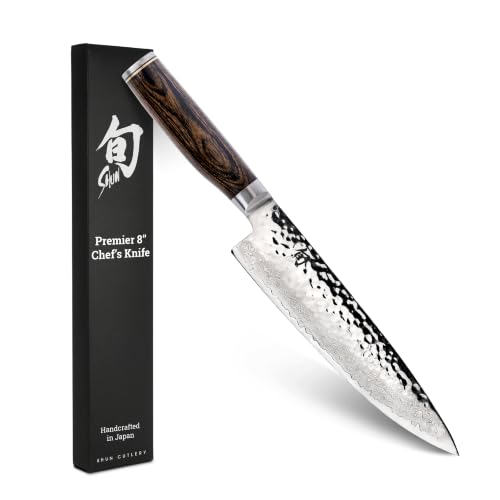
Our top pick is the Wusthof Classic 8-Inch Chef Knife (best overall), because holds a working edge for 4 to 6 weeks of daily home cooking before needing more than a honing steel. The runner-up is the Shun Classic 8-Inch Chef Knife (best japanese), followed by the Victorinox Fibrox Pro 8-Inch Chef Knife.
What is the best budget option among chef knives?
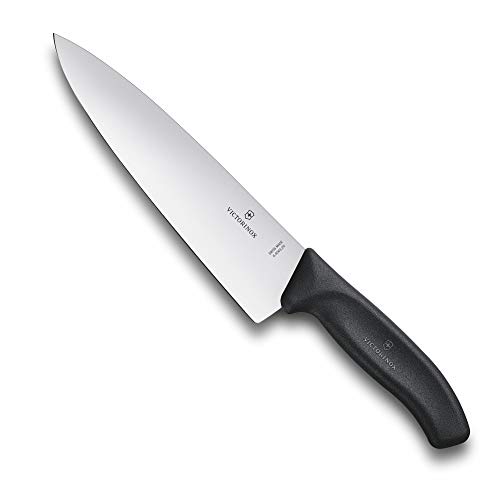
Our best-value pick is the Victorinox Fibrox Pro 8-Inch Chef Knife: delivers cutting performance closer to a 150-dollar knife than the roughly 35-dollar price suggests. Check the current price on Amazon, since deals change often.
Which of the chef knives should I buy?
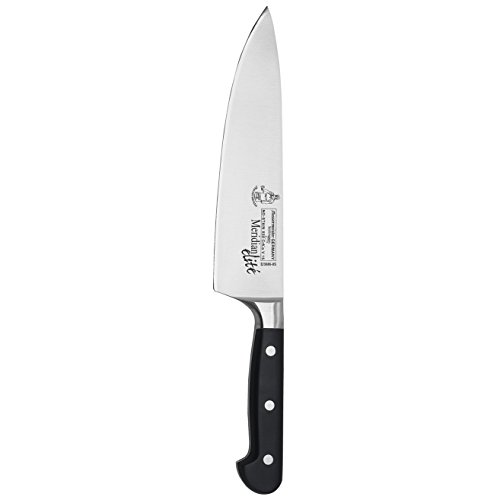
It depends on what matters most to you. For overall, choose the Wusthof Classic 8-Inch Chef Knife. For japanese, choose the Shun Classic 8-Inch Chef Knife. For value, choose the Victorinox Fibrox Pro 8-Inch Chef Knife. For hybrid, choose the Mac Knife MTH-80 Professional Series 8-Inch Chef Knife.
Is the Wusthof Classic 8-Inch Chef Knife worth it?
For most buyers, yes. It ranks #1 in our chef knives research, though 58 HRC steel is harder to sharpen on a whetstone than softer budget steels once honing stops restoring bite.
What is the best chef knife length for most home cooks?
It handles everything from mincing garlic to breaking down a whole chicken without being unwieldy on a standard 24-inch cutting board. A 10-inch blade adds leverage for heavy squash and watermelon but feels front-heavy to smaller hands and demands more counter clearance. Six-inch utility knives are too short to rock-chop herbs or slice through a cabbage in one pass. Start with an 8-inch, cook with it for six months, and only then consider whether a longer blade would solve a specific problem you actually have.
German vs Japanese chef knives: which is better?
Neither is categorically better; they solve different problems. German knives like the Wusthof Classic use softer steel around 56 to 58 HRC, ground to a 14 to 15 degree edge per side, making them tougher against bone and hard squash and easier to sharpen at home with a honing steel. Japanese knives like the Shun Classic use harder steel around 60 to 61 HRC, ground thinner to 16 degrees inclusive, giving a sharper initial edge that holds longer but chips if twisted against bone or frozen food. If you rock-chop a lot and treat knives roughly, German. If you value a laser-th in edge for precision vegetable work and are willing to use a whetstone, Japanese. If you want something in between, the Mac MTH-80 bridges both schools.
How often should I sharpen a chef knife?
Hone before every session, sharpen two to four times a year. Honing with a smooth steel or ceramic rod straightens a rolled edge and takes 30 seconds. Actual sharpening, which removes metal to form a new edge, is needed when honing stops restoring bite. That interval depends on the steel, the cutting surface, and how much you cook: a home cook who uses a wooden board might sharpen twice a year, while a line cook on a poly board may need it monthly. The tomato test is the reliable indicator. If a ripe tomato requires any downward pressure to start the cut, the knife needs sharpening, not honing. Japanese knives hold their edge longer between sharpenings but need a whetstone rather than a pull-through sharpener, which removes too much steel at the wrong angle.
Do I need a full tang chef knife?
Full tang is not the requirement people think it is. A full tang means the steel extends the entire length and width of the handle, which adds weight and theoretically durability. But a well-made half-tang or hidden-tang knife like the Victorinox Fibrox Pro or most Japanese gyutou has survived decades of professional kitchen abuse without tang failures. What you actually want is balance: a knife that does not feel blade-heavy or handle-heavy when you grip it at the bolster. The Victorinox is a half tang and is the most recommended budget chef knife in existence, used harder than most full-tang knives ever will be. Check the balance point, not the tang diagram.
Is a 30-dollar chef knife good enough?
The Victorinox Fibrox Pro at roughly 35 dollars has been the standard budget recommendation for over a decade because the steel takes a good edge, the handle is comfortable and slip-resistant, and the blade geometry is sound. It will not hold its edge as long as a Wusthof or a Shun, and it will need sharpening more frequently, but the actual cutting performance out of the box is closer to a 150-dollar knife than the price gap suggests. What the extra money buys on a premium knife is edge retention, handle material, balance refinement, and in the case of Japanese knives, a thinner grind that produces less resistance through dense vegetables. None of those are reasons to wait if you need a functional knife now.
Can I put a chef knife in the dishwasher?
You can, but you should not, and this is true regardless of what the manufacturer claims. Dishwasher detergent is alkaline and abrasive enough to corrode carbon steel and dull stainless steel over repeated cycles. The real damage, though, is mechanical: knives rattle against racks, other utensils, and each other, chipping and rolling the edge far faster than cutting food does. High-carbon Japanese knives will develop dark corrosion patches after a single cycle. Even German stainless knives lose edge quality measurably faster when dishwashed regularly. Hand wash with soap and water, dry immediately, and store on a magnetic strip or in a blade guard. This takes less time than loading and unloading the dishwasher.