Brushed vs Brushless Motors
Brushed motors use physical carbon brush contacts to transfer electricity to the rotating motor.
Brushes wear down over time and require replacement after heavy use.
Brushed motors are less efficient, converting more energy to heat.
Brushless motors use electronic commutation, no physical contacts.
They are more efficient (15-25% more runtime per charge), run cooler, last longer, and deliver more consistent power as the battery drains.
Battery Voltage and Capacity
Voltage (V) affects maximum power output.
Ampere-hours (Ah) affect runtime.
A 20V 2.0Ah battery runs a drill for shorter duration than a 20V 5.0Ah battery A 20V drill is more powerful than a 12V drill A 20V 2.0Ah battery weighs less than a 20V 5.0Ah battery For occasional home use: 2.0Ah batteries are adequate.
For all-day professional use: 5.0Ah or higher.
UWO vs Torque vs RPM
UWO (Unit Watts Out): DeWALT's measure of actual mechanical output power.
More useful than marketing torque numbers.
Relevant for screwdriving and drilling; not directly comparable between brands because measurement conditions vary.
Relevant for drilling speed and saw blade speed, not for driver performance.
Our picks
Products we recommend
As an Amazon Associate I earn from qualifying purchases. Picks are based on manufacturer specs, independent reviews and owner reports.
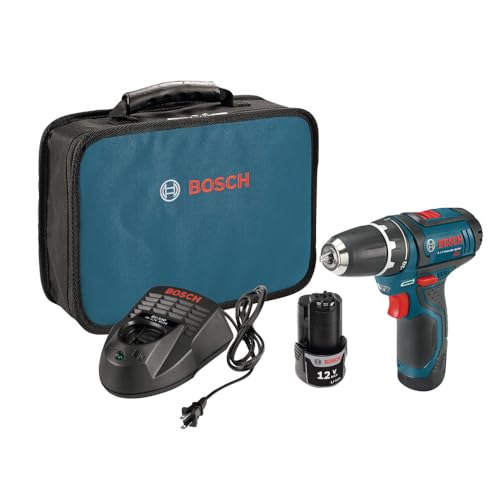
BOSCH
A compact 12V drill/driver kit with two batteries, ideal for light home projects.
✓ Pros
- Compact and light
- Two batteries included
- Good for furniture assembly and small holes
- Bosch 12V platform
✕ Cons
- Less power than 18V/20V drills
- 3/8 inch chuck
- Not for heavy masonry
FAQ
Common questions
Is brushless worth it for power tools?
For tools you use frequently (drill, circular saw), brushless motors are worth the premium. They deliver 15-25% more runtime per charge, run cooler, and last significantly longer before needing maintenance. For tools used occasionally, brushed motors are adequate. Most professional-tier tools are brushless; many homeowner-tier tools are brushed.
What voltage should I get for power tools?
12V tools are compact and adequate for light work, drywall screws, small holes, light assembly. 18-20V tools handle everything up to framing and demolition. For sustained heavy use (continuous cutting through thick lumber, concrete drilling), the higher runtime and power of 20V+ brushless tools is noticeably better. Start with 20V unless portability is the priority.
Are cheap power tools worth buying?
Cheap tools from unknown brands often have adequate specifications but fail at quality-of-life features: poor balance, inaccurate clutch settings, unreliable battery connections. Ryobi is the best-value name brand, tools priced below Ryobi from unfamiliar brands usually have reliability issues with in 2-3 years.
Keep researching
Related guides & comparisons