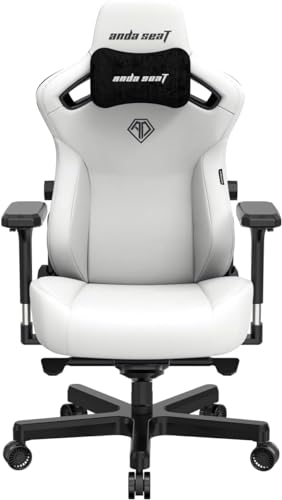

Gaming Chair
Gaming
Prices and availability change, so confirm on Amazon.View on Amazon
Gaming Chair vs Office Chair: we break down the real differences, strengths, tradeoffs, and which one fits your situation.
As an Amazon Associate I earn from qualifying purchases. Picks are based on manufacturer specs, independent reviews and owner reports.
Both are credible options, the right choice depends on which strengths matter more to you. If still torn, the buying guide linked below walks through the decision step by step.
The differences that actually change the buying decision.
Gaming chairs and office chairs are optimized for different postures.
If you game primarily with a controller while reclined or semi-reclined, a gaming chair's high backrest and recline mechanism are better suited to that position.
If you work at a desk typing for 6+ hours per day in an upright forward-leaning posture, a modern ergonomic office chair with forward tilt and synchronized recline mechanisms supports that posture better.
Gaming chair recline is discrete: you pull a lever, recline to an angle, and lock.
Office chair recline is synchronized: the seat tilts proportionally as the backrest moves.
Synchronized recline maintains your pelvis position through the motion; discrete gaming chair recline does not.
Below that, a premium gaming chair and a budget office chair are roughly comparable.
Buy a gaming chair if: you game with a controller in a reclined position regularly, you want the gaming aesthetic, and your sessions are under 6 hours of keyboard-intensive work.
Buy an ergonomic office chair if: you type for 8+ hours daily, back pa in is a primary concern, you plan to use the chair for many years and want warranty protection, and aesthetics are secondary.
For gaming chair recommendations, see best gaming chairs.
Bottom line
Both are credible options, the right choice depends on which strengths matter more to you. If still torn, the buying guide linked below walks through the decision step by step.
Gaming
Office
FAQ
Budget gaming chairs with pillow lumbar inserts are not ideal for 8-hour daily work sessions: the pillow migrates during use, the foam compresses with in a year, and the pillow's lumbar position may not match the user's spinal curve. Premium gaming chairs with integrated lumbar systems and cold-cure foam are genuinely good for the back when properly fitted. Gaming chairs are not inherently bad for the back; low-quality gaming chairs are often bad for the back because of poor lumbar design and cheap foam.
High-end ergonomic office chairs (Herman Miller Aeron, Steelcase Leap) have a distinct functional aesthetic that does not match the gaming aesthetic most RGB desktop setups use. This is a real consideration for users who care about setup aesthetics, and it is a legitimate reason to choose a premium gaming chair over a premium office chair when the ergonomic difference is not significant enough to outweigh the visual preference. Several ergonomic brands have made gaming-adjacent colorways to address this: the Herman Miller x Logitech G collaboration Aeron chairs, for example.
Both are better for 8-hour workdays than a DXRacer.
Yes, and many serious gamers use ergonomic office chairs. The advantages for gaming: ergonomic office chairs mainta in correct posture during long sessions, reducing the back and neck fatigue that affects late-game performance. The disadvantage: most office chairs do not recline past 120 degrees, so controller-based gaming in a reclined position is less comfortable. Keyboard-and-mouse gaming in an upright position is ergonomically better in an office chair than in a gaming chair.
Keep researching