As an Amazon Associate I earn from qualifying purchases. Picks are based on manufacturer specs, independent reviews and owner reports.
Our top picks
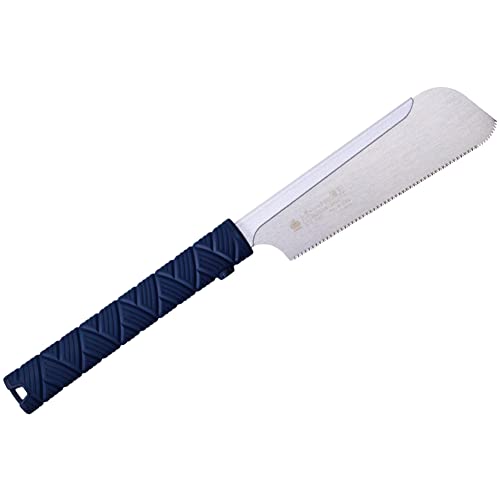
Short on time? Our top recommendation is the Gyokucho Razorsaw 9-1/2-Inch Double Edge (Ryoba) for Hardwoods.
Compare
At a glance
The traits that separate these picks, side by side.
In depth
The 8 best, explained
Why each made the cut, where it falls short, and who should buy it.
Best OverallGyokucho
Pull-stroke design cuts on the pull stroke, which is the natural direction of wrist and arm movement
- Pull-stroke cutting
- Dual-edge (rip and crosscut)
- Th in kerf
- Japanese style
✓ Pros
- Pull-stroke design cuts on the pull stroke, which is the natural direction of wrist and arm movement
- Dual-edge design: crosscut teeth on one side, rip teeth on the other
- Th in kerf removes less material and requires less force than Western-style push saws
- Japanese pull saw teeth are fleam-filed for the cleanest possible cut surface
✕ Cons
- Replacement blades are required rather than resharpening -- a recurring cost
- Dual edge means the back edge teeth can damage the bench or the finished surface
Best Single EdgeGyokucho
Gyokucho is one of the highest-quality Japanese saw brands widely available outside Japan
- Premium Japanese single-edge saw
- Precision-filed crosscut teeth
- No back-edge tooth hazard
- Replaceable blade
✓ Pros
- Gyokucho is one of the highest-quality Japanese saw brands widely available outside Japan
- Precision impulse-hardened teeth stay sharp longer than standard hand-filed teeth
- Single-edge design eliminates the back-edge tooth hazard of a dual-edge ryoba
- The reference recommendation from experienced hand tool woodworkers for flush and single-direction cuts
✕ Cons
- Single edge means a separate saw is needed for the other cutting direction
- Replacement blades are a recurring cost since the impulse-hardened teeth can't be resharpened
Best Western CrosscutStanley
Western-style push saw for woodworkers who prefer the familiar push-stroke action
- Push-stroke Western design
- Triple-cut teeth
- Comfortable handle
- 15-inch blade
✓ Pros
- Western-style push saw for woodworkers who prefer the familiar push-stroke action
- Triple-cut teeth cut faster and stay sharp longer than traditional hand-filed teeth
- 15-inch blade handles large crosscuts and furniture parts
- The most affordable quality crosscut saw -- outperforms every older Western saw for the price
✕ Cons
- Non-sharpenable teeth -- replace the saw when dull
- Produces slightly more tearout than Japanese pull saws in fine woodworking
Best BacksawSpear & Jackson
Spear & Jackson has manufactured British hand saws to a professional standard since 1760
- Brass back reinforced
- Precision filed teeth
- For joinery
- British manufactured since 1760
✓ Pros
- Spear & Jackson has manufactured British hand saws to a professional standard since 1760
- Brass back keeps the blade perfectly straight during precision joinery cuts
- Hand-filed teeth produce a clean cut in hardwood tenon cheeks and shoulders
- A traditional backsaw that will outlast most budget saws with basic care
✕ Cons
- Higher price than a basic hardware-store backsaw
- Specialized for precision joinery -- not appropriate for general rough crosscutting
Best Flush CutGyokucho
Single-edge design eliminates the back-edge tooth hazard of dual-edge saws
- Single-edge design
- No back edge hazard
- Crosscut teeth
- For flush-cutting
✓ Pros
- Single-edge design eliminates the back-edge tooth hazard of dual-edge saws
- Correct for flush-cutting (cutting protruding tenons, dowels, and plugs flush with the surface)
- Gyokucho quality tooth geometry in a single-edge format
- The paired companion to a dual-edge pull saw for workpiece surface protection
✕ Cons
- Single edge means changing saws between rip and crosscut cuts
- Less versatile than dual-edge design
Best Large Flush CutGyokucho
The tradeoff: larger size is less convenient for tight spaces than the shorter Kataba.
- Single-edge, longer blade
- Natural wrapped handle
- Rip and crosscut options
- For larger flush-cut and tenon work
✓ Pros
- Gyokucho produces some of the most widely used Japanese pull saws outside Japan
- 255mm blade reaches across wider tenon shoulders and larger flush-cut surfaces than the 240mm Kataba
- Traditional wrapped handle is comfortable for extended precision work
- The correct saw for woodworkers who need single-edge reach beyond the standard Kataba length
✕ Cons
- Larger size is less convenient for tight spaces than the shorter Kataba
- Impulse-hardened teeth cannot be resharpened -- replace the blade when dull
Best Rough CutIrwin
Coarse teeth cut green wood, pressure-treated lumber, and rough timber faster than fine-tooth saws
- Coarse teeth
- Fast rough cutting
- Softwood and green wood
- Budget price
✓ Pros
- Coarse teeth cut green wood, pressure-treated lumber, and rough timber faster than fine-tooth saws
- Lowest price for a functional 15-inch hand saw
- Hardened teeth last through reasonable use before replacement
- The correct saw for rough cutting, construction lumber, and material preparation
✕ Cons
- Coarse cut produces a rough surface -- not appropriate for joinery or fine woodworking
- Non-sharpenable -- replace when dull
Best DozukiGyokucho
Best Japanese dozuki saw. The highlights are dozuki style: reinforced back keeps the blade perfectly straight during precision cuts and fine crosscut teeth produce the cleanest cut of any hand saw. The tradeoff: back reinforcement limits depth of cut.
- Back-reinforced blade
- Fine crosscut teeth
- For precision joinery
- Japanese dozuki design
✓ Pros
- Dozuki style: reinforced back keeps the blade perfectly straight during precision cuts
- Fine crosscut teeth produce the cleanest cut of any hand saw
- The Japanese equivalent of a Western backsaw -- used for dovetails and joinery
- Gyokucho precision and impulse hardening in the finest-tooth saw category
✕ Cons
- Back reinforcement limits depth of cut
- Fine teeth are slow in thick or coarse stock
How we chose these picks
This shortlist is the product of research, not advertising. We cross-checked manufacturer specs against independent reviews and long-term owner feedback, then ranked by value for real use cases.
Mistakes buyers often make
- Buying on brand name alone instead of matching features to your actual use case.
- Overpaying for headline specs you'll never use, define must-haves first.
- Ignoring size — compatibility, and ongoing costs (filters, accessories, refills).
- Trusting star ratings without reading what owners compla in about after 6 months.
How to choose: the factors that matter
- Capacity and sizing — Measure your space and your actual use before falling for bigger-is-better. The right size is the one that fits your routine, not the spec sheet's maximum.
- Build quality and materials — Heavier-gauge materials, tight tolerances, and solid joints outlast thin, rattly construction. In reviews, look for longevity comments over first-impression praise.
- Ease of use and setup — Clear instructions, intuitive controls, and minimal assembly separate daily drivers from garage ornaments.
- Maintenance and cleaning — Whatever you buy will need cleaning. Removable, dishwasher-safe, or wipe-clean parts get maintained; fiddly ones get neglected.
- Warranty and support — A multi-year warranty signals the manufacturer expects it to last. Check what's actually covered, motors and frames matter more than accessories.
The bottom line
If you want the short answer: the top pick above suits most buyers, the value pick suits tight budgets, and the specialist picks suit specific needs. Match the pick to your use case, not to the hype.
FAQ
Common questions
What are the best hand saws for woodworking 2026 right now?
Our top pick is the Gyokucho Razorsaw 9-1/2-Inch Double Edge (Ryoba) for Hardwoods (best overall), because pull-stroke design cuts on the pull stroke, which is the natural direction of wrist and arm movement. The runner-up is the Gyokucho Razorsaw Kataba Saw 240mm No. 410 (best single edge), followed by the Stanley 15-579 15-Inch SharpTooth Saw.
Which of the hand saws for woodworking 2026 should I buy?
It depends on what matters most to you. For overall, choose the Gyokucho Razorsaw 9-1/2-Inch Double Edge (Ryoba) for Hardwoods. For single edge, choose the Gyokucho Razorsaw Kataba Saw 240mm No. 410. For western crosscut, choose the Stanley 15-579 15-Inch SharpTooth Saw. For backsaw, choose the Spear & Jackson Professional Tenon Saw, 10-Inch x 13 PPI.
Is the Gyokucho Razorsaw 9-1/2-Inch Double Edge (Ryoba) for Hardwoods worth it?
For most buyers, yes. It ranks #1 in our hand saws for woodworking 2026 research, though replacement blades are required rather than resharpening -- a recurring cost.
Keep researching
Related guides & comparisons