As an Amazon Associate I earn from qualifying purchases. Picks are based on manufacturer specs, independent reviews and owner reports.
Our top picks
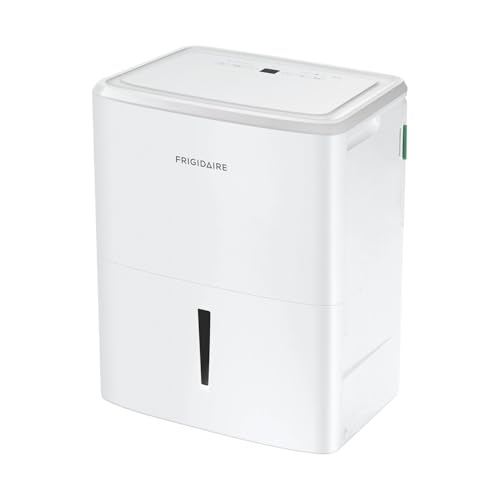
Short on time? Our top recommendation is the Frigidaire FFAP5033W1 50-Pint Dehumidifier with Pump.
Compare
At a glance
The traits that separate these picks, side by side.
| # | Product | Best for | Key feature | |
|---|
| 1 | | — | 50-pint-per-day moisture removal, 4,500 sq ft coverage | Check ↗ |
| 2 | | — | 35-pint-per-day rating, covers up to 3,500 sq ft | Check ↗ |
| 3 | | — | 50-pint-per-day rating for up to 4,500 sq ft | Check ↗ |
| 4 | | — | — | Check ↗ |
| 5 | | — | — | Check ↗ |
| 6 | | — | — | Check ↗ |
In depth
The 6 best, explained
Why each made the cut, where it falls short, and who should buy it.
Top pickFrigidaire
It stands out for highest raw capacity of the picks in this price bracket and 41°F operating floor covers a cold basement most competitors can't handle. The tradeoff: no app connectivity, unlike the Midea Cube.
- 50-pint-per-day moisture removal, 4,500 sq ft coverage
- Built-in condensate pump for continuous drainage
- Rated to operate down to 41°F
- Energy Star certified with washable filter
✓ Pros
- Highest raw capacity of the picks in this price bracket
- 41°F operating floor covers a cold basement most competitors can't handle
- Built-in pump and Energy Star certification typically both included at this price
✕ Cons
- No app connectivity, unlike the Midea Cube
- Larger footprint than the Midea Cube's nested form factor
- Casters struggle on uneven flooring
Midea
App control and Alexa compatibility are rare at this price for any brand
- 35-pint-per-day rating, covers up to 3,500 sq ft
- Built-in pump with included dra in hose
- Wi-Fi control via the MideaAir app, works with Alexa
- Quietest tested compressor in this category, drawing as little as 512 watts
✓ Pros
- App control and Alexa compatibility are rare at this price for any brand
- Quietest compressor of the four models reviewed in this category
- Expandable Cube tank cuts how often it needs emptying
✕ Cons
- 35-pint capacity is lower than the Frigidaire or TOSOT's 50-pint rating
- Typically sits near the top of this price bracket at full retail
- Learning the Cube's lift-and-twist mechanism takes a try or two
TOSOT
It stands out for 15-foot pump lift is the longest reach of the units in this price bracket and auto-restart keeps settings intact after a brief power interruption. The tradeoff: owner reports note compressor longevity concerns after 2 to 3 seasons.
- 50-pint-per-day rating for up to 4,500 sq ft
- Internal pump lifts water up to 15 feet through a 19-foot hose
- Energy Star certified and UL listed
- Auto-restart after a power outage
✓ Pros
- 15-foot pump lift is the longest reach of the units in this price bracket
- Auto-restart keeps settings intact after a brief power interruption
✕ Cons
- Owner reports note compressor longevity concerns after 2 to 3 seasons
- Louder at full fan speed than the Midea Cube
hOmeLabs
A popular Energy Star dehumidifier with a continuous dra in option and a 24-hour timer.
✓ Pros
- Energy Star certified
- Continuous dra in option
- Auto restart after power outages
- Turbo fan mode
✕ Cons
- Tank capacity is modest without a hose
- Listing capacity figures vary by test standard
- Noise on high fan
BLACK+DECKER
A 50-pint Energy Star dehumidifier for basements and large damp spaces.
✓ Pros
- 50-pint capacity for wet basements
- Energy Star certified
- Continuous dra in option
- Simple controls
✕ Cons
- Heavy to move
- Coverage claims depend on test standard
- Louder than smaller units
Frigidaire
A 35-pint Energy Star dehumidifier with app control for bedrooms and medium rooms.
✓ Pros
- Wi-Fi app control and alerts
- Energy Star certified
- Continuous dra in option
- Right-sized for bedrooms
✕ Cons
- 1.7-gallon bucket fills quickly in damp rooms
- Audible compressor
- App setup required for smart features
How we chose these picks
Every pick below earned its place through documented strengths, verified specifications, consistent praise in reputable reviews, and owner-feedback patterns. We don't sell placements, and we don't invent test scores.
Mistakes buyers often make
- Choosing the cheapest option without checking warranty and support quality.
- Assuming all models work with your existing setup, verify compatibility first.
- Skipping the measurements: returns most often come from fit surprises.
- Chasing the newest release when last year's model does the same job for less.
How to choose: the factors that matter
- Capacity and sizing — Measure your space and your actual use before falling for bigger-is-better. The right size is the one that fits your routine, not the spec sheet's maximum.
- Build quality and materials — Heavier-gauge materials, tight tolerances, and solid joints outlast thin, rattly construction. In reviews, look for longevity comments over first-impression praise.
- Ease of use and setup — Clear instructions, intuitive controls, and minimal assembly separate daily drivers from garage ornaments.
- Maintenance and cleaning — Whatever you buy will need cleaning. Removable, dishwasher-safe, or wipe-clean parts get maintained; fiddly ones get neglected.
- Warranty and support — A multi-year warranty signals the manufacturer expects it to last. Check what's actually covered, motors and frames matter more than accessories.
The bottom line
If you want the short answer: the top pick above suits most buyers, the value pick suits tight budgets, and the specialist picks suit specific needs. Match the pick to your use case, not to the hype.
FAQ
Common questions
What are the best dehumidifiers under $250 right now?
Our top pick is the Frigidaire FFAP5033W1 50-Pint Dehumidifier with Pump (top pick), because highest raw capacity of the picks in this price bracket. The runner-up is the Midea Cube 35-Pint Smart Dehumidifier with Pump, followed by the TOSOT 50-Pint Dehumidifier with Internal Pump.
Is the Frigidaire FFAP5033W1 50-Pint Dehumidifier with Pump worth it?
For most buyers, yes. It ranks #1 in our dehumidifiers under $250 research, though no app connectivity, unlike the Midea Cube.
What extra features do you get in the $150 to $250 range?
This is typically w here built-in condensate pumps, smart app connectivity, and Energy Star certification all become standard rather than optional.
Is the Frigidaire or the Midea Cube the better buy under $250?
It depends on priorities. The Frigidaire FFAP5033W1 has more raw capacity at 50 pints per day and a lower operating temperature floor of 41°F, better for a large or cold basement. The Midea Cube trades some capacity for app control, a quieter compressor, and lower power draw, better for a bedroom or a household that wants remote monitoring.
Do I need a pump at this price point?
A pump lets the unit dra in continuously to a sink, window, or floor dra in without anyone emptying a bucket, which matters most in a basement or crawl space that isn't checked daily.
How much capacity do I actually need in this price range?
For most single rooms or small basements under 1,500 square feet, a 35-pint unit like the Midea Cube is enough. For larger basements, whole-floor coverage, or genuinely damp climates, the 50-pint Frigidaire or TOSOT provide meaningfully more headroom for the same or a similar price.
Keep researching
Related guides & comparisons